in lieu
Indigenous Peoples' Day
October 11th 2021
Indigenous Peoples' Day is a holiday that celebrates and honors Native American peoples and commemorates their histories and cultures.
_ _ _ _ _
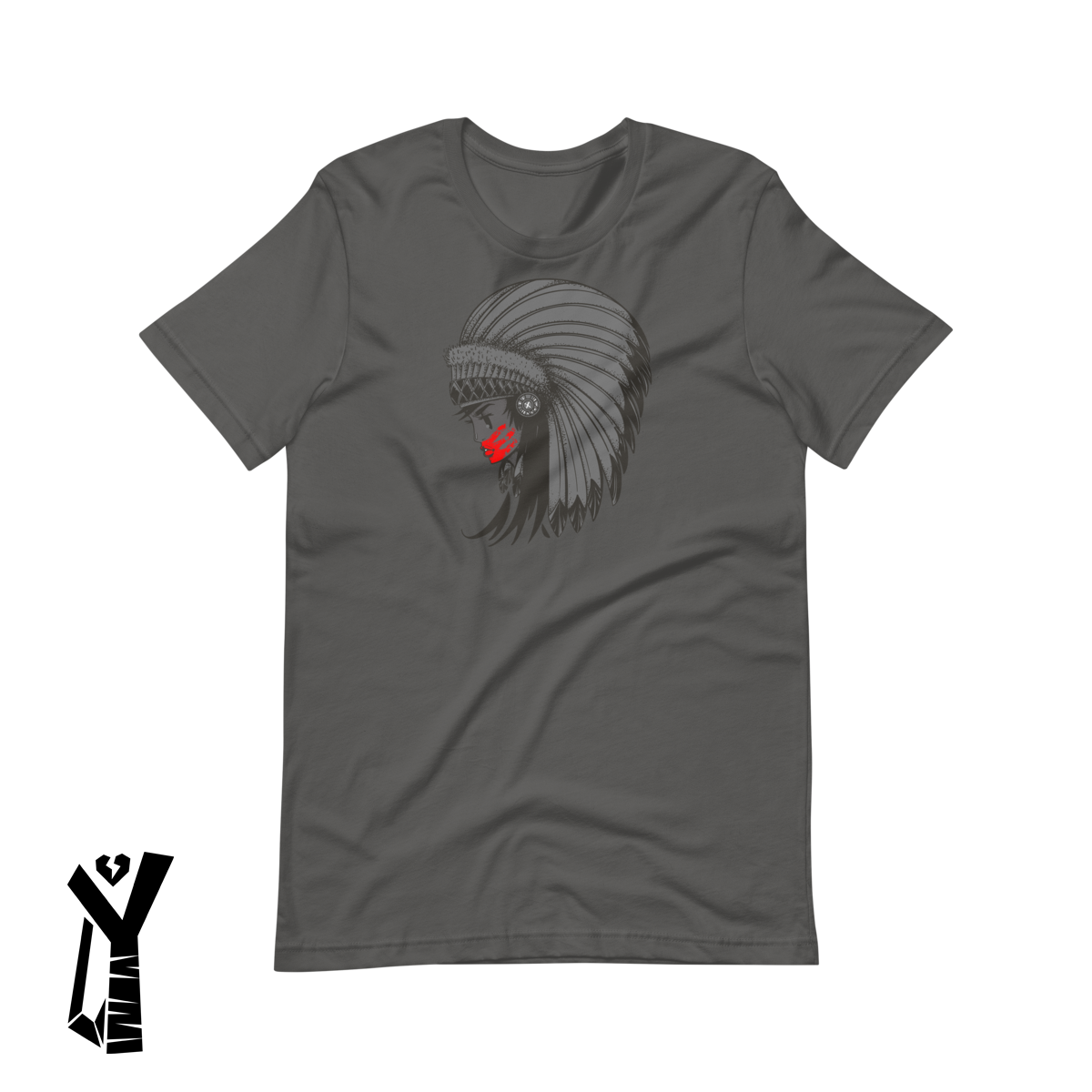
MISSING AND MURDERED INDIGENOUS WOMEN
being a male in this world comes with a privilege we often take for granted or just oblivious to, the ones that know use it to their advantage or think it’s just simply their right.
as we look back at all human history most cultures around the world have found some superiority complex over our better half including indigenous people.
being a father of all girls…to be honest it comes with its fair share of anxiety and fear. do your try and protect them and shield them from the wrongs of the world or do you teach them to bend this world to their will? i choose the latter.
apart of me had a feeling that i would have girls even before they were here and i knew it would be my job as their father to raise strong women, to face anything this world threw at them - to not just survive but to thrive in it -
to take everything the world gives them and let it whittle ‘em down to a blade…and be-brutal.
_ _ _ _ _
The Missing and Murdered Indigenous Women (MMIW) human-rights crisis disproportionately affects Indigenous peoples in Canada and the United States, notably those in the FNMI (First Nations, Métis, Inuit) and Native American communities. A corresponding mass movement in the US and Canada works to raise awareness of missing and murdered Indigenous women and girls (MMIWG) through organized marches; the building of databases; local community, city council, and tribal council meetings; and domestic violence trainings for police.
MMIW has been described as a Canadian national crisis and a Canadian genocide. In response to repeated calls from Indigenous groups, activists, and non-governmental organizations, the Government of Canada under Prime Minister Justin Trudeau established a national public inquiry, the National Inquiry into Missing and Murdered Indigenous Women and Girls, in September 2016. According to the inquiry's backgrounder, between the years 1980 and 2012, Indigenous women and girls represented 16% of all female homicides in Canada, while constituting only 4% of the female population in Canada. The inquiry was completed and presented to the public on June 3, 2019.
A 2014 report by the RCMP, titled "Missing and Murdered Aboriginal Women: A National Operational Overview", found that more than 1,000 Indigenous women were murdered over a span of 30 years. From 2001 to 2015, the homicide rate for Indigenous women in Canada was almost six times as high as the homicide rate for other women, representing "4.82 per 100,000 population versus 0.82 per 100,000 population." In Nunavut, Yukon, the Northwest Territories, and in the provinces of Manitoba, Alberta and Saskatchewan, this over-representation of Indigenous women among homicide victims was even higher. The Native Women's Association of Canada (NWAC) has documented 582 cases since the 1960s, with 39% after 2000—though advocacy groups say that many more women have been missing in Canada, with the highest number of cases in British Columbia. Notable cases have included 19 women killed in the Highway of Tears murders, and some of the 49 women from the Vancouver area murdered by serial killer Robert Pickton.
In the US, Native American women are more than twice as likely to experience violence than any other demographic. One in three Indigenous women is sexually assaulted during her life, and 67% of these assaults are perpetrated by other races. The federal Violence Against Women Act (VAWA) was reauthorized in 2013, which for the first time gave tribes jurisdiction to investigate and prosecute felony domestic violence offenses involving both Native American offenders as well as offenders of other races on reservations. In 2019, the House of Representatives, led by the Democratic Party, passed H.R. 1585 (Violence Against Women Reauthorization Act of 2019) by a vote of 263–158, which increases tribes' prosecution rights much further. The bill was not taken up by the Senate, which at the time had a Republican majority.Law enforcement, journalists, and activists in Indigenous communities in both the US and Canada have fought to bring awareness to the connection between sex trafficking, sexual harassment, sexual assault, and the women who go missing and are murdered.
organizations to learn more:
re-post from oct 12, 2020
in honor of indigenous people month:
native american slavery co existed with african american slavery from the 16th all the way through the late 19th century.
because african slavery was legal (at that time), its victims were easy to spot in the historic records - they were taxes upon arrival at ports, appear on bills of sale, wills and other documents. because these slaves had to cross the atlantic ocean they were scrupulous, one could say obsessively counted along the way.
The final tally of 12.5 million enslaved africans…until recently we didn’t have a ballpark estimate of native people held in bondage since it was largely illegal, so this had to be done in dark corners or behind locked doors.
native slaves didn’t have to cross the ocean, there were no documentation or port records.
yet…if we were able to count the number of native slaves counted in the new world from the time of
Columbus
until the end of the 19th century…the figure would run somewhere between 2.5 & 5 million slaves.
at the height of the slave trade west africa had a population decline of 20%
but in relative terms of the new world the indigenous people of the new world experienced a more catastrophic decline in the 16th and 17th centuries - in the caribbean basin along the golf coast and across large regions of northern mexico and the american south west - native populations were reduced by
70 - 90%
(ref: the other slavery by Andrés Reséndez)
other fun facts:
native american removal act (for example moved to reservations): 1830
womans rights: 1848
african americans freed: 1863
african american citizenship: 1866
african american vote: 1870
womans vote: 1920
native american citizenship: 1924
native american vote (snyder act): 1924
though it was state decided (arizona & new mexico were last 1948)
asian american citzenship / vote: 1940-1950s
happy indigenous people day…month
be-brutal
tradition dictates that women in many tribes were not allowed to wear headdresses or warbonnets, that honor was reserved for male elders, chiefs or warriors that earned the right.
i say indigenous women have more than earned the right to do whatever the f*** they want…burn it down and let it light a new way.
all proceeds will be donated (tba)
ssxhb - available now until nov. 25th
thank you all for your support, it’ll be going to a great cause.